
How Much Does House Cleaning Cost? A Transparent Breakdown
A clean home makes everything feel easier, but before you hire help, you probably want to know what it costs. House cleaning prices can feel confusing because every company quotes differently, and the final number depends on more than just the size of your home. Some charge by the hour, others by the room or the square foot, and rates shift depending on how often you book.
At Vella, we keep our pricing simple and predictable, so you always know what you are paying for and why.
This blog breaks down what affects your house cleaning cost, what our hourly rates look like, how basic and deep cleaning compare, and a few easy ways to get more value from every visit.
What Affects the Cost of House Cleaning
Several factors shape your final price, and understanding them helps you compare quotes fairly.
- Home size. Larger homes require more time and materials, so square footage is one of the biggest drivers of total cost. A studio apartment and a five-bedroom house are never going to land at the same price.
- Type of cleaning. A routine tidy costs less than a detailed deep clean or a move-out clean, both of which involve more tasks and more labor.
- Frequency. One-time visits usually carry the highest hourly rate. Booking on a recurring schedule brings that rate down.
- Condition of the home. A space that has not been cleaned in a while needs extra attention, which can raise the price of the first appointment.
- Add-ons. Special requests, such as interior cabinets, the inside of the oven, or changing linens, may fall outside a standard clean.
Because of these variables, the most honest way to price a clean is by the time and effort it actually takes. If you are weighing your options, our comparison of a housekeeper and a maid explains what each service typically includes.
Vella’s House Cleaning Rates
We charge consistent hourly rates based on how often we clean your home. The more regularly we visit, the lower your hourly rate, because a maintained home simply takes less time to clean.
- One-time cleaning: $118 per hour
- Every four weeks: $112 per hour
- Biweekly cleaning: $106 per hour
- Weekly cleaning: $99 per hour
Every clean is handled by a team of two trained housekeepers, which means the work gets done faster and more thoroughly than a single cleaner could manage. You can see exactly what a standard visit includes on our basic cleaning.
As we price by the hour, your total cost scales naturally with your home’s size and condition. A small apartment takes fewer hours than a large house, so you only pay for the time your space actually needs. That is also why we do not quote a flat price per square foot. Two homes of the same size can need very different amounts of work depending on clutter, pets, and how recently they were cleaned.
Basic Cleaning vs Deep Cleaning Cost
Knowing the difference between these two services helps you pick the right one and avoid paying for more than you need.
A basic clean covers the everyday tasks that keep a home fresh: dusting furniture, wiping cabinet exteriors, vacuuming and mopping floors, making beds, cleaning kitchen counters and appliances, washing dishes, and sanitizing bathrooms. It is the right fit for ongoing upkeep.
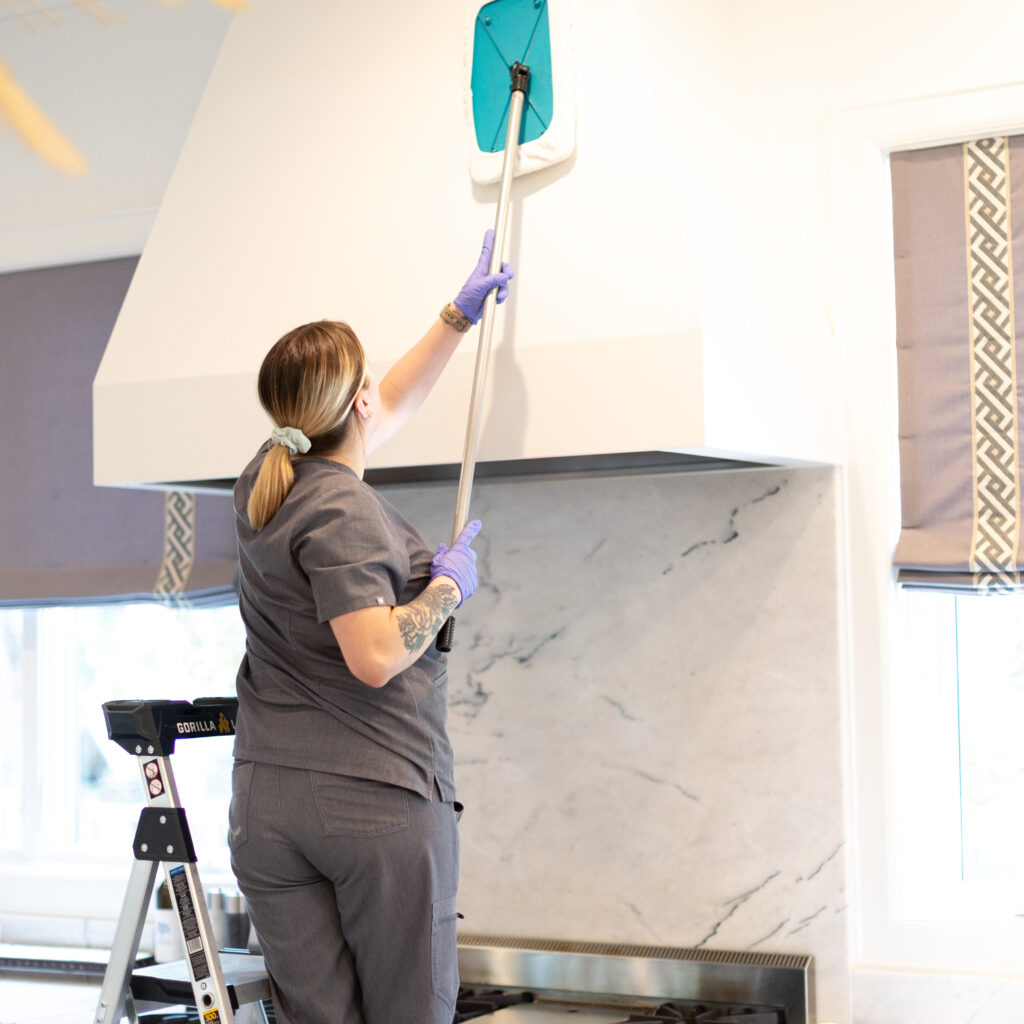
A deep clean includes everything in a basic clean plus detailed work that does not happen every week. That means cleaning vents, vacuuming upholstery, scrubbing grout, dusting ceiling fans and light fixtures, hand-cleaning baseboards and floor edges, and wiping down the range hood inside and out. Because a deep clean takes more time, it costs more than a basic visit. It is the smart choice for a first appointment or a seasonal reset, since it brings your home to a baseline that regular cleaning can then maintain.
Move-Out and Apartment Cleaning Cost
Cleaning after a move is one of the most demanding jobs, and it usually arrives when you are already stretched thin. A move-out clean focuses on getting a property into top condition after the furniture is gone, including the appliances and hard-to-reach details that are easiest to handle once a space is empty. It tends to cost more than a routine clean because of the depth involved.
Apartment cleaning generally costs less than a house simply because there is less square footage to cover, which means fewer hours on the clock. The same hourly logic applies, so a smaller space keeps your total lower without cutting any corners on quality. If you are timing a move-out clean around a lease deadline, booking early gives your team enough room to do the job right rather than rushing through the appliances and corners landlords tend to inspect most closely.
How to Get the Most Value From Your Cleaning Service
You have more control over your house-cleaning costs than you might think.
- Book on a schedule. A recurring weekly or biweekly clean lowers your hourly rate and keeps your home from ever needing an intensive reset.
- Declutter first. Clearing surfaces and floors lets the team spend their time cleaning rather than tidying, making every hour count.
- Bundle big tasks. Grouping seasonal jobs into a single deep clean is usually more efficient than spreading them over several visits.
- Share your priorities. Telling your team what matters most helps them focus on the hours where you want them.
These small steps stretch every dollar while keeping your home consistently clean. Over time, a maintained home rarely needs the kind of intensive deep clean a neglected one does, so a steady schedule often costs less in the long run than a string of one-time visits.
If you are cleaning ahead of guests or want to gift a service, our gift cards are an easy option too.
Frequently Asked Questions
How much does house cleaning cost per hour at Vella?
Rates run from $99 per hour for weekly service to $118 per hour for a one-time clean, based on how often you book.
Is a deep clean more expensive than a basic clean?
Yes. A deep clean involves more tasks and more time, so it costs more than a standard basic clean.
Does house size affect the price?
Yes. Since Vella prices by the hour, larger homes take longer to clean and cost more than smaller spaces.
How can I lower my house cleaning costs?
Book on a recurring schedule and declutter before each visit. Regular cleanings carry a lower hourly rate.
Are cleaning supplies included in the price?
Yes. Vella brings its own non-toxic products and equipment for every clean.
Transparent Cleaning Across Dallas, Austin, and Beyond
Vella has been making homes sparkle since 2009, and we believe good cleaning should come with clear pricing and no surprises. Our trained teams are bonded and insured, and we use non-toxic products that keep your family safe.
We serve homes across the Dallas-Fort Worth metroplex and Austin, including Plano, Highland Park, and Fort Worth. Ready for a cleaner home at a price you can plan for?
Contact Vella today or book your cleaning online.
How to Wash Couch Cushion Covers Without Ruining Them (By Fabric Type)
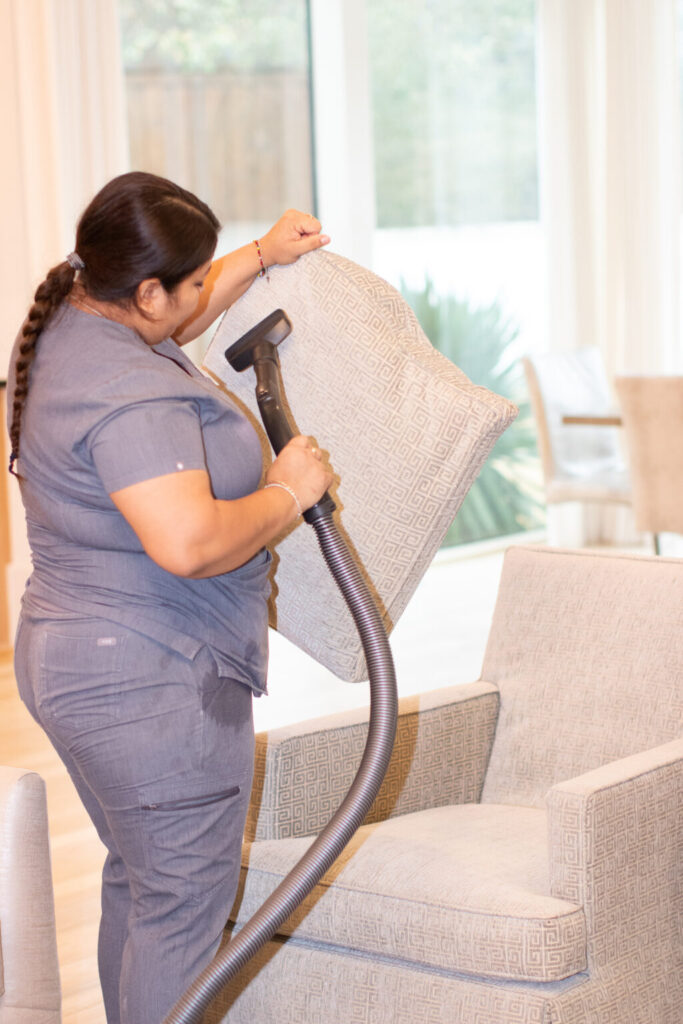
Wondering how to clean couch cushions without shrinking, fading, or warping the covers? The honest answer: it depends entirely on your fabric. The method that makes cotton look brand new will crush velvet, and the water that’s fine for polyester will crack leather.
This blog breaks down how to wash couch cushion covers by fabric type: cotton, microfiber, velvet, linen, and leather. Plus how to read your care label, what not to do, and when it’s smarter to skip the DIY and call a professional upholstery cleaning service.
Step 1: Decode Your Care Label
Before anything touches water, unzip a cushion and find the tag. You’re looking for two things.
The upholstery cleaning code:
| Code | What It Means |
| W | Water-based cleaning is safe (most DIY methods work) |
| S | Solvent only. Dry-clean or call a pro |
| W/S | Water or solvent cleaners are both safe |
| X | Vacuum only; anything wet requires professional cleaning |
The laundry symbols (on removable covers):
- A bucket with water means machine washable (the number inside is the max temperature).
- A hand in the bucket means hand wash only.
- An X through the bucket means do not wash.
- A square with a circle means tumble drying is allowed.
- A plain circle means dry clean.
No tag? Spot test first. Dab a mild detergent solution onto a hidden corner, wait 10 minutes, and check for color bleeding or water rings before proceeding.
How to Wash Couch Cushion Covers by Fabric Type
So, are couch cushion covers machine washable? Many are, but only if the fabric and the tag agree. Here’s the safe method for each.
Cotton
Cotton is the most forgiving fabric and the most likely to shrink.
- Unzip the covers, turn them inside out, and zip them closed so the zipper doesn’t snag the drum.
- Pre-treat any spots first.
- Machine wash on a cold, gentle cycle with mild detergent.
- Air dry, or tumble on low and pull them out while slightly damp. Then put them back on the cushions damp so they stretch back to shape as they finish drying.
Don’t use hot water, bleach, or a full dryer cycle. Heat is the number one cause of covers that no longer fit.
Microfiber and Polyester
Most microfiber covers are W- or W/S-coded, which makes cleaning fabric sofas fairly easy.
- Wash inside out on cold, gentle cycle, mild detergent.
- For spot cleaning without a full wash, lightly mist rubbing alcohol on the stain and blot with a white sponge.
- Air-dry only, then fluff the nap with a soft-bristled brush.
Don’t use fabric softener (it coats the fibers and attracts dirt) or high heat (polyester pills and can melt).
Velvet
Velvet is the fabric we get the most rescue calls about. Most velvet covers are S- or X-coded.
- Vacuum weekly with a soft brush attachment, moving with the nap.
- Refresh with a handheld steamer held a few inches away.
- If the tag explicitly allows water, hand-wash in cold water without wringing, then brush the pile gently once dry.
Don’t scrub, wring, iron directly, or machine wash unless the label clearly says you can.
Linen
Linen handles washing well but wrinkles and shrinks if you rush it.
- Wash inside out in cold or lukewarm water on a gentle cycle.
- Lay flat or hang to dry. Never hot tumble.
- Iron inside out while still slightly damp for a crisp finish.
Don’t use bleach or a hot dryer; both weaken linen fibers fast.
Leather and Faux Leather
Never machine-wash leather, as water and detergent strip its oils.
- Wipe down with a barely damp microfiber cloth.
- Clean with a dedicated leather cleaner, then condition every 6 months or so.
- For faux leather, a little mild dish soap in warm water on a cloth is enough.
Don’t soak leather, use vinegar or alcohol on it, or dry it near heat.
Not sure about your fabric? Vella’s team handles all types.
Book a deep clean, and we’ll take it from here.
When DIY Works and When to Call a Pro
Our team’s honest take after cleaning thousands of Texas homes:
DIY is fine when your covers are removable, the tag says W, and you’re dealing with everyday dirt or fresh spills.
Call a professional cleaning service when the tag says S or X, the cushions aren’t removable, odors live in the foam (not just the cover), stains have set in, or the fabric is velvet, silk, antique, or anything you’d hate to ruin.
A botched DIY attempt often costs more to fix than professional sofa cleaning would have cost in the first place, and harsh products can do more harm than good, which is why we cover safe methods in our guide to cleaning furniture safely.
Vella provides upholstery and furniture cleaning as part of our deep cleaning services across Texas, including Austin, Fort Worth, Plano, Frisco, and the Dallas neighborhoods of Highland Park, Uptown and Downtown, Preston Hollow, and Lakewood.
FAQs
Are couch cushion covers machine washable?
Only if the care tag shows a W code and a wash-bucket symbol. Cotton, linen, and most polyester covers usually are; velvet, leather, and anything marked S or X are not.
Can you put couch cushion covers in the dryer?
Usually no or low heat at most. Air-drying prevents shrinking, and cotton covers go back on most easily when slightly damp.
How often should you clean couch cushions?
Vacuum weekly, wash removable covers every 3–6 months, and book a professional deep clean once or twice a year.
The Bottom Line
The best way to clean a couch starts with the label, not the washing machine. Match your method to your fabric, keep heat away from anything that can shrink, and know when a cover is telling you it needs a professional.
Get a professional couch cleaned. Book online in under 60 seconds.