
What Does a House Cleaner Actually Do? Room-by-Room Duties Explained
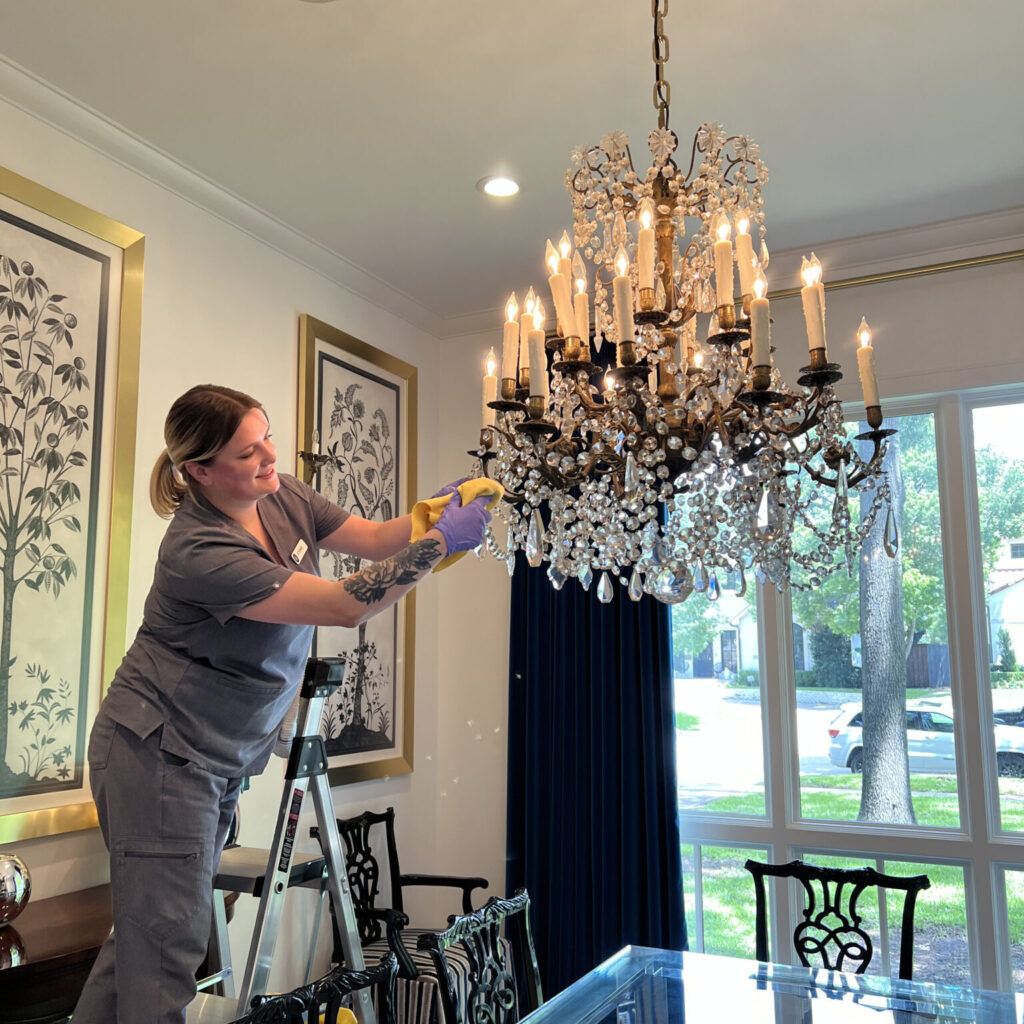
If you’ve never hired a house cleaner before, the whole cleaning process can feel like a black box. What do house cleaners do once they walk through your door? Will they touch your stuff? Should you leave? Do you tip?
Whether you’re searching for housekeeping services near me for the first time or switching from a cleaner who wasn’t cutting it, this guide breaks down exactly what professional housekeeping services include, room by room, service level by service level, so there are zero surprises on cleaning day.
What to Expect Before Your Cleaner Arrives
Most people overthink this part. But a little prep goes a long way for both you and your house cleaner.
Pick up personal items, clothing, and anything fragile or sentimental from surfaces and floors. Clear the kitchen sink if you can. Put pets in a safe, comfortable space.
Beyond that? You don’t need to pre-clean. That’s literally why you’re hiring someone. A good residential cleaning service will walk in, assess the space, and get to work.
House Cleaning Duties, Room by Room
So what does a housekeeper do in each room? Here’s a realistic breakdown of the duties you can expect from a reputable house cleaning service.
Kitchen
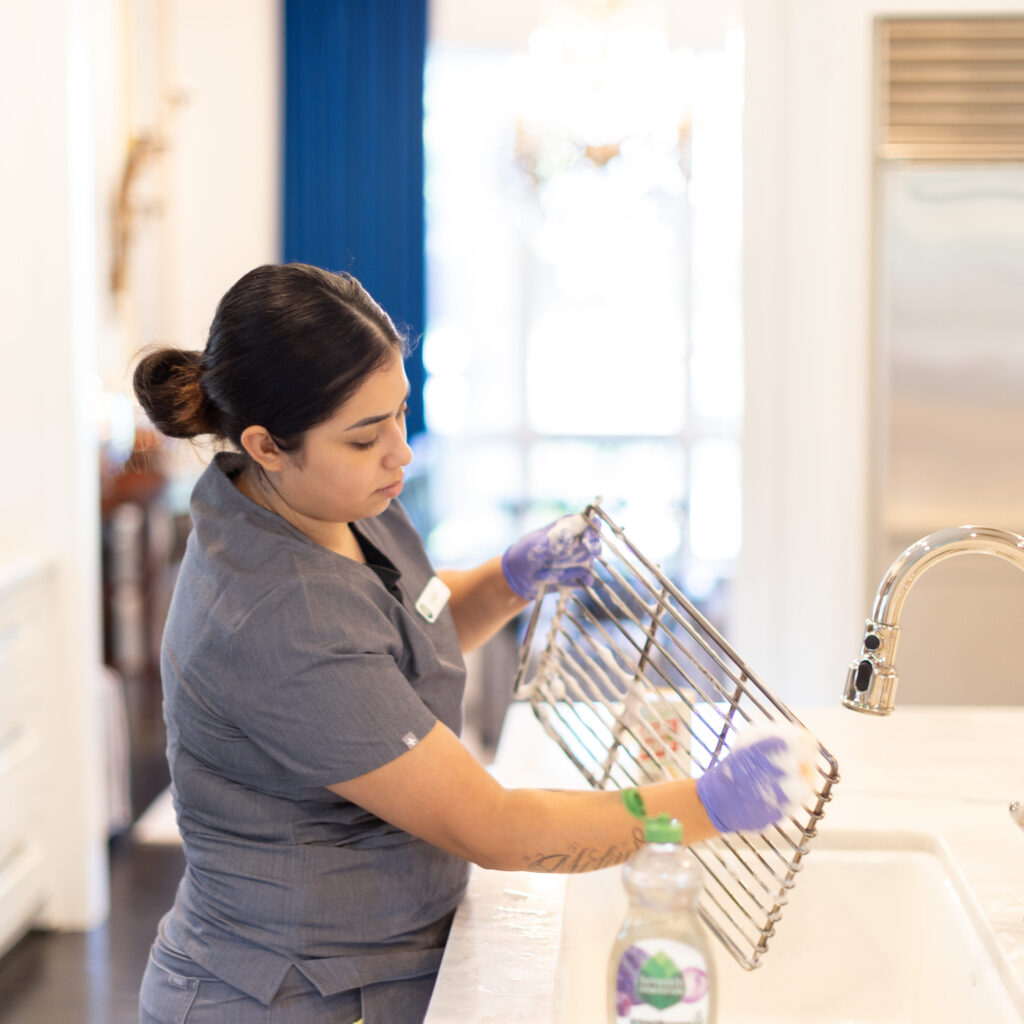
The kitchen is where most house cleaner duties start. Expect countertops wiped and sanitized, stovetop and range exterior cleaned, appliance fronts wiped down (microwave, fridge, dishwasher), sink scrubbed and fixtures polished, cabinet fronts spot-cleaned, and floors swept and mopped.
A basic clean covers all of this. A deep clean adds the inside of the oven, range hood degreasing, and interior appliance wipe-downs.
Bathrooms
Bathrooms get the most intensive attention during any professional cleaning service. Standard house cleaning duties include toilets scrubbed inside and out, showers and tubs cleaned and rinsed, mirrors and glass polished streak-free, vanity counters and sinks sanitized, fixtures polished, and floors mopped.
In Texas specifically, hard water buildup on shower glass and fixtures is a constant battle, something Vella’s team sees daily across Austin, Dallas, and Fort Worth homes.
Bedrooms
Bedroom cleaning is straightforward but often overlooked by discount services. Expect dusting of all surfaces and furniture, vacuuming carpets or mopping hard floors, making beds and fluffing pillows, and wiping nightstands, dressers, and baseboards.
Living Areas and Common Rooms
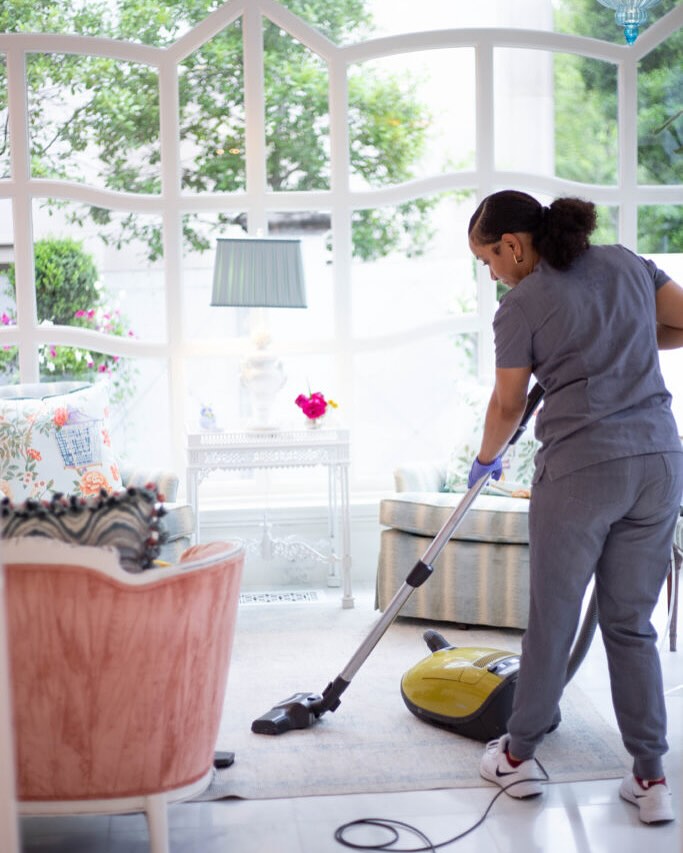
Your living room, dining room, and hallways should all receive dusting of shelves, decor, and electronics, vacuuming and/or mopping all floors, spot-cleaning light switches and door handles, and tidying cushions and throws.
These high-touch areas matter. Professional housekeeping services should always include sanitizing frequently touched surfaces, especially if you have kids or pets at home.
Want to see exactly what Vella covers? Check out our full Basic Clean checklist.
Duties by Service Level: Basic vs. Deep vs. Move-Out
Not all house cleaning services are the same scope. Here’s how housekeeping duties shift depending on the service level you book:
| Task | Basic Clean | Deep Clean | Move-Out Clean |
| Surface wiping and sanitizing | ✓ | ✓ | ✓ |
| Vacuuming and mopping all floors | ✓ | ✓ | ✓ |
| Bathroom scrub (toilet, tub, sink) | ✓ | ✓ | ✓ |
| Kitchen appliance exteriors | ✓ | ✓ | ✓ |
| Making beds | ✓ | ✓ | — |
| Inside oven and fridge | — | ✓ | ✓ |
| Baseboard hand-wiping | — | ✓ | ✓ |
| Range hood degreasing | — | ✓ | ✓ |
| Interior cabinet wipe-down | — | ✓ | ✓ |
| Light fixture and ceiling fan cleaning | — | ✓ | ✓ |
| Wall spot-cleaning and scuff removal | — | — | ✓ |
| Garage or patio sweep | — | — | ✓ |
If you’re hiring a cleaner for the first time, a deep clean is often the smartest starting point. It resets your home to a baseline, and then a weekly cleaning service or recurring cleaning services keep it there.
What a Vella Housekeeper’s Day Actually Looks Like
Here’s a peek behind the curtain.
When a Vella cleaner arrives at your home, whether that’s a condo in Highland Park, a family house in Frisco, or a bungalow in Austin, this is the typical flow:
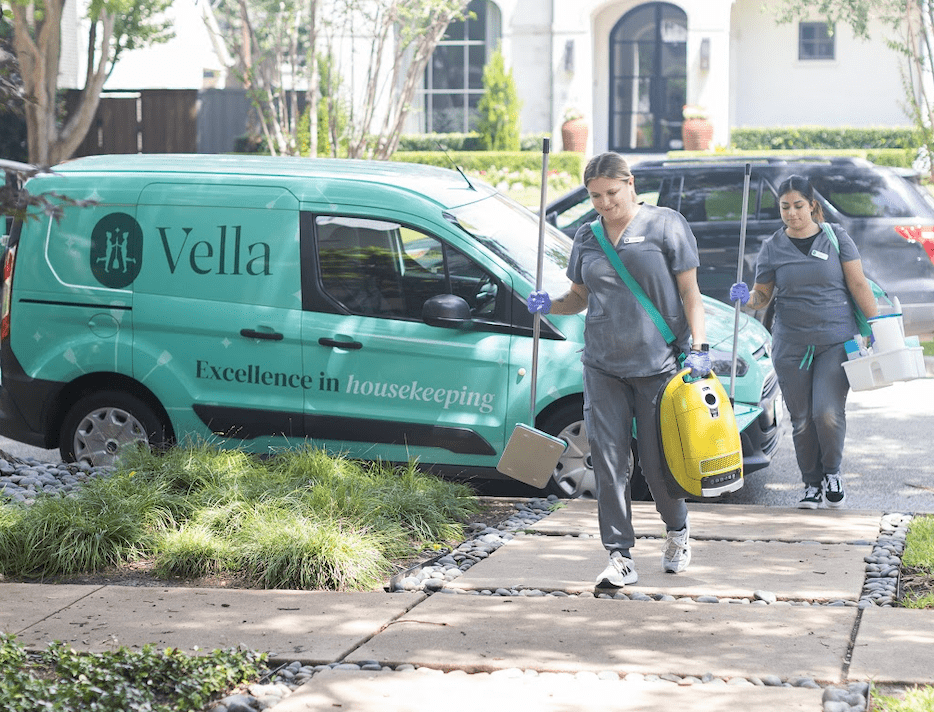
We arrive on time, in uniform, with all supplies and equipment in hand. Vella provides professional-grade, eco-friendly cleaning products, you don’t need to supply anything.
We start with the kitchen and bathrooms, since those require the most product dwell time. While solutions sit and break down grime, we move through bedrooms and living areas, dusting top to bottom, vacuuming, and wiping surfaces. We circle back to scrub, rinse, and polish the wet rooms.
Before leaving, we do a final walkthrough: checking for missed spots, straightening anything we moved, and making sure the home looks and smells like it just exhaled.
The whole process typically takes two to four hours for a standard home, depending on size and service level.
Why Texas Homes Need a Different Cleaning Approach
If you’re searching for housekeeping services in Austin, Dallas, Highland Park, or Fort Worth, your home faces challenges that other regions don’t.
Central Texas dust and pollen are relentless, especially from February through June. Cedar, oak, and ragweed coat surfaces fast, so recurring cleaning services aren’t a luxury here, they’re practically a necessity. High humidity in summer also means bathroom mildew builds faster, and hard water leaves mineral deposits on every glass surface.
Vella’s cleaners are trained specifically for Texas homes.
How Vella Earns Your Trust
When you let someone into your home, credentials matter. Every Vella cleaner goes through a thorough vetting process that includes background checks, reference verification, and in-person interviews. We carry full liability insurance. And every cleaner is trained on Vella’s proprietary checklist system, so your clean is consistent every single visit, regardless of who shows up.
We’re not a marketplace that matches you with random independent contractors. We’re a professional housekeeping service that employs, trains, and stands behind every person on our team.
If something isn’t right, our team makes it right. That’s the difference between searching for cleaning services near me and actually finding a company you can rely on month after month.
FAQs
What do house cleaners do during a typical visit?
House cleaners handle surface cleaning, sanitizing, vacuuming, mopping, bathroom scrubbing, kitchen cleaning, dusting, and making beds. The exact housekeeping duties list depends on whether you book a basic, deep, or move-out clean.
How long does a house cleaning take?
A standard home cleaning typically takes two to four hours, depending on the size of the home and the service level. Deep cleans and move-out cleans take longer.
How often should I schedule house cleaning services?
For most Texas homes, a weekly cleaning service or biweekly recurring cleaning service keeps dust, pollen, and everyday grime under control. A monthly deep clean is a great complement.
Does Vella bring cleaning supplies?
Yes. Vella provides all professional-grade cleaning products and equipment. You don’t need to supply anything.
Are Vella’s cleaners background-checked and insured?
Every Vella team member passes a background check, reference verification, and in-person interview. Vella carries full liability insurance on every job.
Ready for a Vella Clean?
If you are looking for dependable residential cleaning services in Texas, our team at Vella provides careful, surface-specific house cleaning services designed to protect your home and everything inside it.
So, stop wondering and start relaxing!
Take Vella’s Clean Quiz and book your first housekeeper today.
How to Fix Sticky Floors After Mopping: What Works in 2026
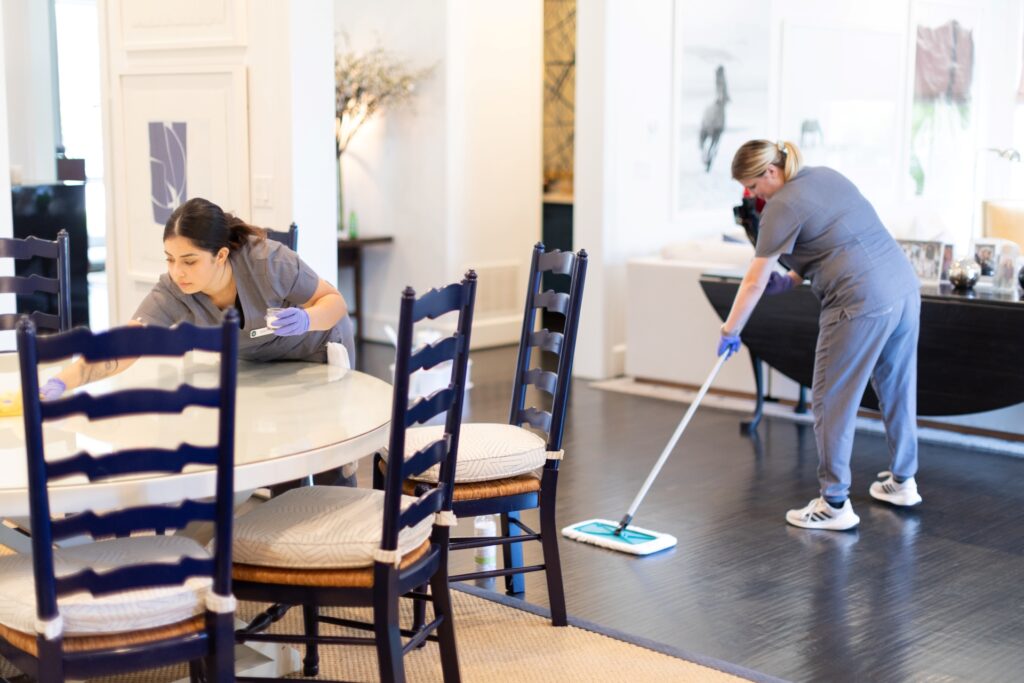
You mopped the whole kitchen. It took 20 minutes. And somehow, the floor feels worse than before you started: tacky underfoot, attracting every crumb and pet hair in a ten-foot radius.
If your floor is still sticky after mopping, you’re not imagining things, and you’re not bad at cleaning. Something specific is going wrong in your process, and once you identify it, the fix is usually fast.
We asked Vella’s lead housekeepers, the ones who clean 15+ homes a week across Dallas, Austin, Fort Worth, Plano, and Frisco, what actually causes sticky floors and how they eliminate the problem every single time.
Here’s what they told us.
Why Your Floors Are Sticky After Mopping: A Diagnostic Guide
“Sticky floors after mopping” isn’t one problem; it’s a symptom with several possible causes. Before you grab a mop again, figure out which one applies to you.
Cause #1: Too Much Cleaning Product
This is the number-one reason floors stay sticky after mopping, and it’s the mistake our housekeepers see most often in the homes they service. Most store-bought floor cleaners are concentrated. When you pour a generous splash into your mop bucket without measuring, you coat your floors with a thin layer of soap that never fully rinses away. That film dries sticky, then attracts dirt, so your floors look dirty again within a day.
The Test: Run a damp finger across your floor after it dries. If it feels slippery or leaves a streak, you’ve got product buildup.
Cause #2: Wrong Cleaner for Your Floor Type
A cleaner that works beautifully on tile can destroy a hardwood finish. Oil-based products on laminate leave a waxy residue. Multi-surface cleaners marketed as “works on everything” often work well on nothing. Each floor material has a different surface chemistry, and using the wrong product is one of the most common reasons for a sticky floor after mopping.
Quick reference:
- Hardwood: pH-neutral, no-wax cleaner only. Never use vinegar (it dulls the finish over time). Never steam.
- Laminate: Barely-damp mop with a laminate-specific spray. Excess water warps the boards and leaves residue.
- Tile and Grout: Alkaline cleaners work well here.
- Vinyl/LVP: Mild dish soap (a few drops) in warm water, or a vinyl-specific cleaner. Skip anything abrasive.
Cause #3: Dirty Mop Water
Think about what happens when you dip a mop into a bucket of water that’s already full of dissolved dirt, grease, and old soap. You’re painting that grimy mixture right back onto the floor. The water might look “mostly clean,” but the dissolved residue is invisible, and it’s exactly what causes that sticky film.
Cause #4: Hard Water (A Big One in Texas)
This is the cause most cleaning blogs skip, and it matters enormously if you live in the Dallas–Fort Worth metroplex or the Austin area.
Texas has some of the hardest water in the country; the state average is 224 ppm (classified as “very hard”), well above the national average of 100 ppm. Dallas water typically measures 140–160 mg/L of mineral content, and parts of the Austin metro area hit 260 mg/L or higher.
Those dissolved calcium and magnesium minerals don’t evaporate when your floor dries. They stay behind as a chalky, slightly tacky film. If you’ve ever noticed white residue on your faucets or shower doors, the same thing is happening on your floors; you just can’t see it as easily on a dark surface.
Cause #5: Not Rinsing After Mopping
Many people treat mopping as a one-pass job: soap water, mop, done. But if you skip the rinse pass, every molecule of cleaning product stays on the floor. Professional housekeepers always do at minimum two passes, one to clean, one to rinse, and that second pass is what separates sticky floors from clean ones.
Hate mopping? Let Vella handle it, book a clean.
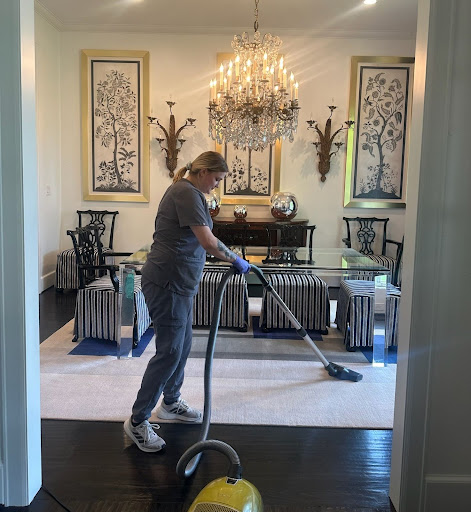
The Exact Method Vella’s Housekeepers Use: Step-by-Step
This is the process our team follows on every job. It works on tile, hardwood, laminate, vinyl, and luxury vinyl plank. Adjust your product choice based on floor type (see the reference above), but the method stays the same.
Step 1: Dry-Clean First
Before any liquid touches the floor, sweep or vacuum thoroughly. A microfiber dust mop is ideal because it traps fine particles instead of pushing them around. If you skip this step, you’re mixing loose dirt into your mop water and creating mud.
Step 2: Mix Your Solution Correctly
Fill your bucket with warm (not hot) water. Add your floor cleaner at the exact dilution ratio on the label, and if anything, err on the side of less. Our housekeepers typically use about half the recommended amount. For most floors, the water should look barely tinted, not sudsy.
Vella’s go-to for tile and vinyl:
A few drops of a plant-based dish soap (like Branch Basics diluted concentrate) in a gallon of warm water. That’s it. No fragrance boosters, no “shine enhancers,” no multi-purpose sprays.
For hardwood:
A pH-neutral hardwood floor cleaner. Spray directly onto a microfiber mop pad; never pour onto the floor or into a bucket. Hardwood and standing water are enemies.
Step 3: Wring the Mop Until It’s Almost Dry
This is the single most important technique for preventing sticky floors. Your mop should be damp, not dripping. When you wring it out, squeeze until no water drips. Then squeeze again. A waterlogged mop leaves too much solution on the surface, which is the primary cause of residue.
Our team uses flat microfiber mops (not string mops) for exactly this reason. They’re easier to wring to the right dampness level, and they don’t leave lint behind.
Step 4: Mop in Sections, Change Water Often
Work in roughly 6-by-6-foot sections, and swap your water the moment it looks murky. In a typical kitchen, that means changing water at least twice. Yes, it takes an extra minute. But dirty mop water is the second-biggest reason your floor is still sticky after mopping.
Step 5: Do a Clean-Water Rinse Pass
After you’ve mopped the entire floor with your cleaning solution, dump the bucket. Refill with clean warm water: no soap, no product, just water. Wring the mop nearly dry again and do one more pass over everything. This rinse removes the last traces of cleaner.
Step 6: Dry the Floor
Don’t let the floor air-dry if you can help it, especially in a humid Texas summer when evaporation is slow, and mineral deposits have more time to form. Run a dry microfiber mop or clean towel over the floor to pick up remaining moisture. This step takes two minutes and makes a noticeable difference.
This is exactly what our housekeepers do on every visit.
See Vella’s Basic Clean and book now.
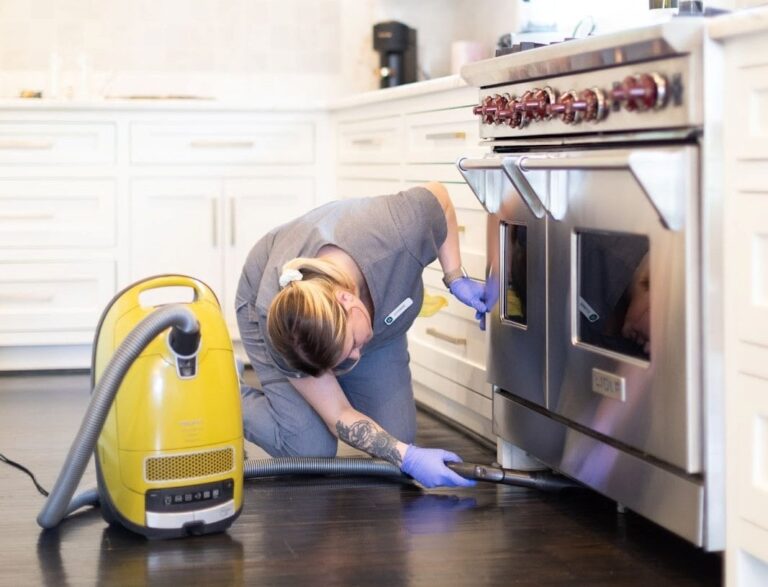
Floor-by-Floor Cleaning Cheat Sheet
- Hardwood floors: Use a pH-neutral hardwood cleaner (Bona or similar), spray onto a microfiber pad, and damp-mop only. Never use vinegar, steam, or excess water. Buff dry immediately.
- Laminate floors: Spray a laminate-specific cleaner onto the mop pad; never pour water directly on laminate. Use minimal moisture. Dry with a towel promptly.
- Ceramic and porcelain tile: Warm water with a small amount of alkaline cleaner or a few drops of dish soap. Vinegar rinse is safe here. Mop grout lines in your regular deep-cleaning rotation.
- Vinyl and luxury vinyl plank (LVP): Warm water with a tiny amount of dish soap or vinyl-safe cleaner. Avoid abrasive pads. Vinegar rinse is safe. Dry after mopping.
- Natural stone (marble, travertine, slate): pH-neutral stone cleaner only. No vinegar, no lemon, no generic multi-surface products. These surfaces are acid-sensitive and will etch.
Frequently Asked Questions
How often should I mop my floors?
For most households, once a week in the kitchen and every two weeks elsewhere is a good baseline. Homes with pets, kids, or heavy foot traffic may need more frequent mopping. You can also use eco-friendly products to keep things simple and safe between deeper cleans.
Why is my floor sticky even though I barely used any cleaner?
If you’ve ruled out product overuse, the culprit is likely hard water, a dirty mop, or residue from previous cleanings that has built up over time. Try a plain hot-water-only mop session with a clean microfiber pad to strip away old buildup, then start fresh with the method above.
Is a steam mop safe for all floors?
Steam mops are effective on sealed tile and some vinyl floors. They should never be used on hardwood, laminate, or unsealed surfaces.
Should I use a string mop or a flat mop?
Flat microfiber mops are better for virtually every floor type. They’re easier to wring dry (critical for preventing sticky residue), they don’t leave lint, and the pads are machine-washable.
When to Call in Vella
If your floors have layers of old product buildup, if you’re dealing with stubborn hard water staining, or if you’d simply rather spend your Saturday doing something other than perfecting your mop technique, that’s what we’re here for.
Vella’s housekeepers serve Dallas, Austin, Fort Worth, Plano, Frisco, and surrounding communities. Every clean includes proper floor care using the exact method described above, with products matched to your specific floor type.
Get a professionally clean home. Take our Clean Quiz, and we’ll match you with the right service.