
How to Wash Couch Cushion Covers Without Ruining Them (By Fabric Type)
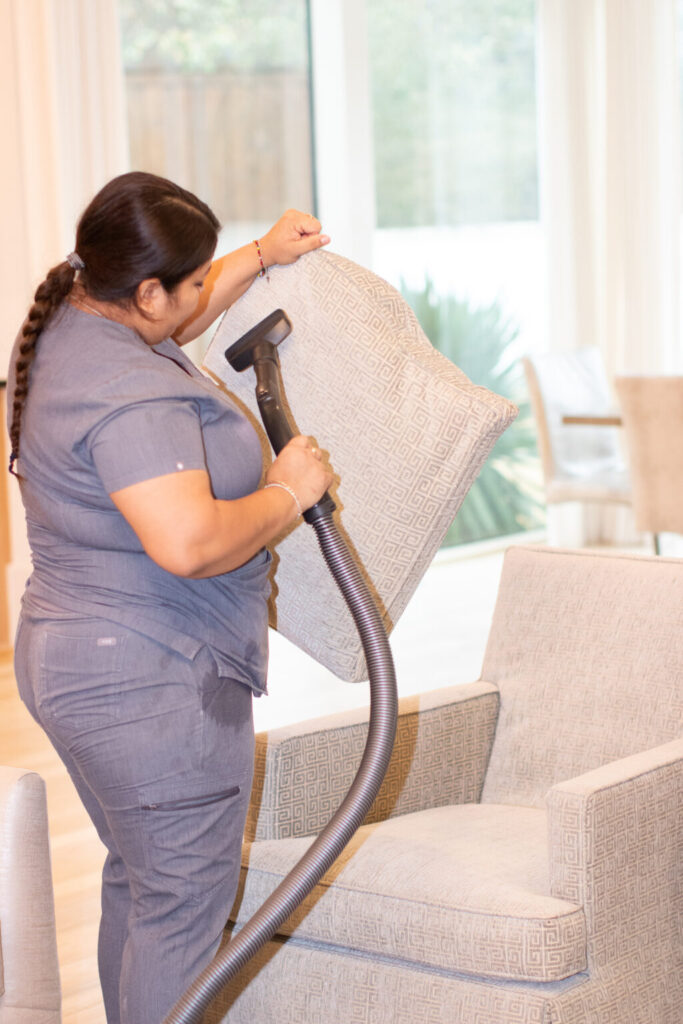
Wondering how to clean couch cushions without shrinking, fading, or warping the covers? The honest answer: it depends entirely on your fabric. The method that makes cotton look brand new will crush velvet, and the water that’s fine for polyester will crack leather.
This blog breaks down how to wash couch cushion covers by fabric type: cotton, microfiber, velvet, linen, and leather. Plus how to read your care label, what not to do, and when it’s smarter to skip the DIY and call a professional upholstery cleaning service.
Step 1: Decode Your Care Label
Before anything touches water, unzip a cushion and find the tag. You’re looking for two things.
The upholstery cleaning code:
| Code | What It Means |
| W | Water-based cleaning is safe (most DIY methods work) |
| S | Solvent only. Dry-clean or call a pro |
| W/S | Water or solvent cleaners are both safe |
| X | Vacuum only; anything wet requires professional cleaning |
The laundry symbols (on removable covers):
- A bucket with water means machine washable (the number inside is the max temperature).
- A hand in the bucket means hand wash only.
- An X through the bucket means do not wash.
- A square with a circle means tumble drying is allowed.
- A plain circle means dry clean.
No tag? Spot test first. Dab a mild detergent solution onto a hidden corner, wait 10 minutes, and check for color bleeding or water rings before proceeding.
How to Wash Couch Cushion Covers by Fabric Type
So, are couch cushion covers machine washable? Many are, but only if the fabric and the tag agree. Here’s the safe method for each.
Cotton
Cotton is the most forgiving fabric and the most likely to shrink.
- Unzip the covers, turn them inside out, and zip them closed so the zipper doesn’t snag the drum.
- Pre-treat any spots first.
- Machine wash on a cold, gentle cycle with mild detergent.
- Air dry, or tumble on low and pull them out while slightly damp. Then put them back on the cushions damp so they stretch back to shape as they finish drying.
Don’t use hot water, bleach, or a full dryer cycle. Heat is the number one cause of covers that no longer fit.
Microfiber and Polyester
Most microfiber covers are W- or W/S-coded, which makes cleaning fabric sofas fairly easy.
- Wash inside out on cold, gentle cycle, mild detergent.
- For spot cleaning without a full wash, lightly mist rubbing alcohol on the stain and blot with a white sponge.
- Air-dry only, then fluff the nap with a soft-bristled brush.
Don’t use fabric softener (it coats the fibers and attracts dirt) or high heat (polyester pills and can melt).
Velvet
Velvet is the fabric we get the most rescue calls about. Most velvet covers are S- or X-coded.
- Vacuum weekly with a soft brush attachment, moving with the nap.
- Refresh with a handheld steamer held a few inches away.
- If the tag explicitly allows water, hand-wash in cold water without wringing, then brush the pile gently once dry.
Don’t scrub, wring, iron directly, or machine wash unless the label clearly says you can.
Linen
Linen handles washing well but wrinkles and shrinks if you rush it.
- Wash inside out in cold or lukewarm water on a gentle cycle.
- Lay flat or hang to dry. Never hot tumble.
- Iron inside out while still slightly damp for a crisp finish.
Don’t use bleach or a hot dryer; both weaken linen fibers fast.
Leather and Faux Leather
Never machine-wash leather, as water and detergent strip its oils.
- Wipe down with a barely damp microfiber cloth.
- Clean with a dedicated leather cleaner, then condition every 6 months or so.
- For faux leather, a little mild dish soap in warm water on a cloth is enough.
Don’t soak leather, use vinegar or alcohol on it, or dry it near heat.
Not sure about your fabric? Vella’s team handles all types.
Book a deep clean, and we’ll take it from here.
When DIY Works and When to Call a Pro
Our team’s honest take after cleaning thousands of Texas homes:
DIY is fine when your covers are removable, the tag says W, and you’re dealing with everyday dirt or fresh spills.
Call a professional cleaning service when the tag says S or X, the cushions aren’t removable, odors live in the foam (not just the cover), stains have set in, or the fabric is velvet, silk, antique, or anything you’d hate to ruin.
A botched DIY attempt often costs more to fix than professional sofa cleaning would have cost in the first place, and harsh products can do more harm than good, which is why we cover safe methods in our guide to cleaning furniture safely.
Vella provides upholstery and furniture cleaning as part of our deep cleaning services across Texas, including Austin, Fort Worth, Plano, Frisco, and the Dallas neighborhoods of Highland Park, Uptown and Downtown, Preston Hollow, and Lakewood.
FAQs
Are couch cushion covers machine washable?
Only if the care tag shows a W code and a wash-bucket symbol. Cotton, linen, and most polyester covers usually are; velvet, leather, and anything marked S or X are not.
Can you put couch cushion covers in the dryer?
Usually no or low heat at most. Air-drying prevents shrinking, and cotton covers go back on most easily when slightly damp.
How often should you clean couch cushions?
Vacuum weekly, wash removable covers every 3–6 months, and book a professional deep clean once or twice a year.
The Bottom Line
The best way to clean a couch starts with the label, not the washing machine. Match your method to your fabric, keep heat away from anything that can shrink, and know when a cover is telling you it needs a professional.
Get a professional couch cleaned. Book online in under 60 seconds.